


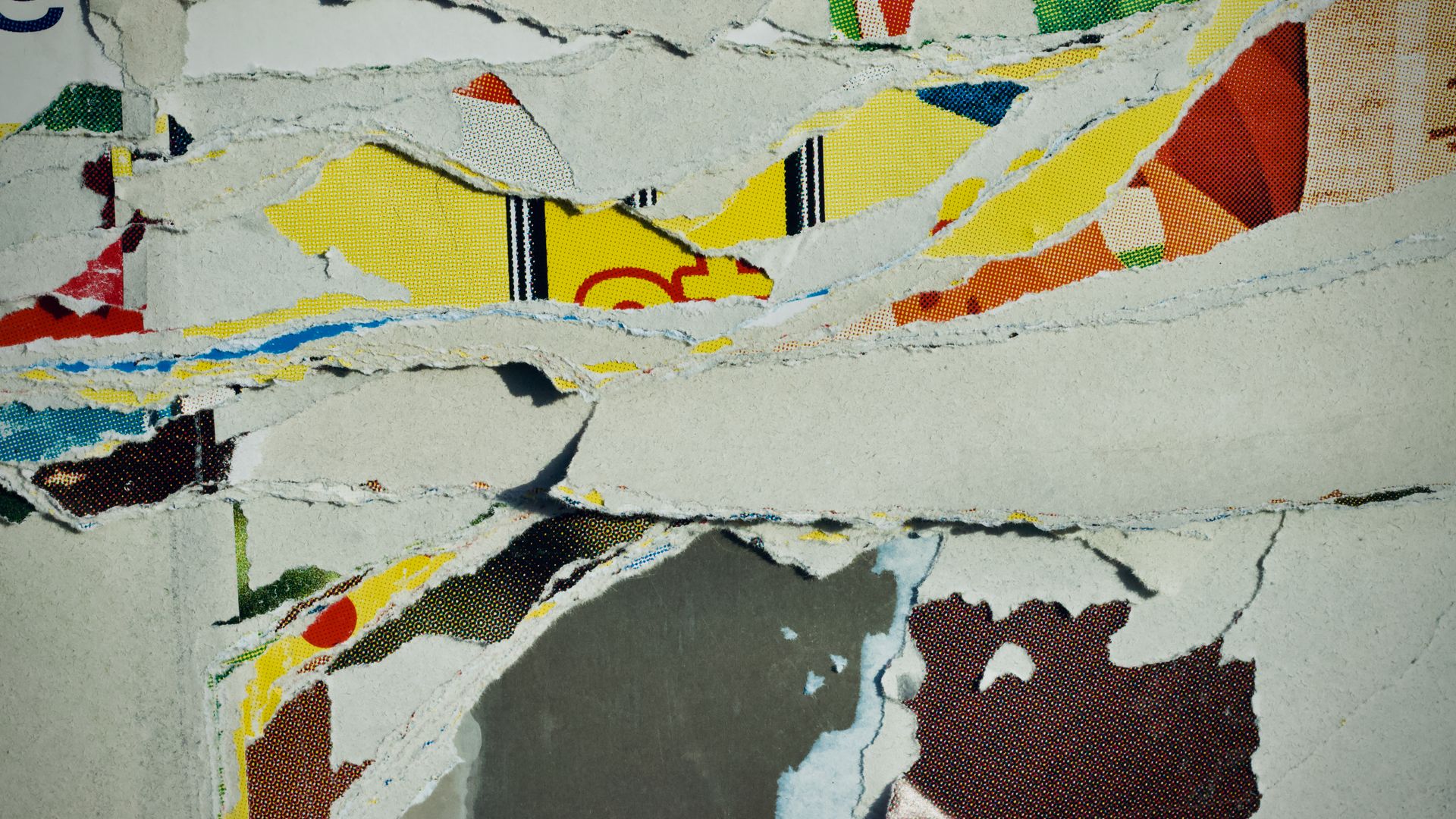
Magnifiquement brisé: Pourquoi 2026 , la plus grande tendance de conception est imperfection
Au cours des dernières années, la direction du voyage dans le design s'est stabilisée : plus propre, plus lisse, plus rapide, plus automatisée. Donc, quand les gros rapports de tendance 2026 ont commencé à atterrir, nous nous attendions à plus de la même chose. Au lieu de cela, Canva, Adobe et Pinterest sont arrivés à plus ou moins la même conclusion, indépendamment de l'autre : les gens sont fatigués de parfait. Le langage visuel qui prend forme pour 2026 est texturé, fait à la main, un peu désordonné et sans équivoque humain. Voici ce que la recherche dit réellement, et ce que nous pensons que cela signifie pour les marques.
Imperfect by Design est une tendance actuelle Maintenant:
Rapport sur les tendances en matière de conception de la canva's 2026 — s'appuyant sur une enquête auprès de 1 000 créateurs, un conseil consultatif de concepteurs et une analyse de milliards de dessins dans une collectivité de 260 millions de personnes — nommé toute l'année "Imperfect by Design". Les chiffres sont difficiles à ignorer : la recherche d'éléments de bricolage et de scrapbook augmente de 90 % par année, les textures douces et tactiles augmentent de 30 % et 80 % des créateurs interrogés estiment que 2026 est « l'année où nous regagnons le contrôle créatif ». Les tendances qui en sortent sont des choses comme Notes App Chic, qui est exactement à quoi ça ressemble, et Texture Check, toutes les surfaces vitreuses, cireuses, tactiles. Les bords rudes ne sont plus une erreur. Ils sont le but.
AI est le copilote, pas l'auteur:
Il vaut la peine de dire clairement : rien de tout cela n'est anti-AI. Dans cette même recherche Canva, 77 % des créateurs ont décrit l'IA comme un « partenaire essentiel ». Ce qui a changé, c'est à quoi il sert. Adobe-S 2026 Creative Trends prévisions nomme Surreal Sillines comme l'une de ses quatre tendances déterminantes — Travail AI qui s'appuie sur le rêve et évidemment impossible plutôt que d'essayer de passer comme une photographie. Les créateurs de Canva ont choisi Reality Warp, un mélange similaire de réel et surréaliste, comme la tendance la plus susceptible de définir l'année (24%). Le fil commun est la conscience de soi. Le travail semble fait exprès. Ce que les publics repoussent n'est pas l'IA dans le processus, c'est l'IA qui prétend être quelque chose qu'il n'est pas.
Un design qui vous fait sentir quelque chose:
Adobe frames 2026 autour de la traction émotionnelle et sensorielle. Deux de ses quatre tendances, All the Feels and Connectionering, visent à concevoir pour les sens et les moments humains partagés plutôt que pour le rouleau. L'affaire commerciale est à ses côtés : le rapport d'Adobe cite des recherches selon lesquelles 95,2 % des chefs de file considèrent maintenant le contenu visuel comme critique pour les entreprises, et que 82 % des consommateurs mondiaux s'attendent à ce que le plus grand nombre possible de leurs sens soient engagés lorsqu'ils vivent quelque chose de nouveau. Texture, son, mouvement, matérialité. Les choses qui rendent une marque se sentent présentes plutôt que simplement visibles.
Local Beats Global :
La quatrième tendance d'Adobe, Local Flavor, consiste à mettre de côté l'image de marque internationale polie en faveur de l'imagerie qui montre une culture à travers ses propres yeux. Les données de Canva's atterrissent au même endroit sous un autre angle : trois de ses dix tendances 2026 sont explicitement régionales — GrannyWave, un renouveau historique à haute altitude de l'Inde, Zinegeist, cut-and-paste zine culture du Mexique, et Block Party, symboles culturels espagnols dans les teintes vintage. Pour un marché comme Maurice, c'est un signal utile. La spécificité voyage plus loin que le vernis générique, et il est beaucoup plus difficile à copier.
Les publics choisissent, ne suivent pas :
Pinterest Prévues 2026, tiré de la recherche et du comportement visuel de 600 millions d'utilisateurs mensuels et avec un taux de précision de 88 % sur six ans, ajoute une note de discipline à tout cela. Les tendances évoluent maintenant 4,4 fois plus vite qu'il y a sept ans, mais 42 % des gens disent qu'ils ne s'engagent qu'avec ceux qui correspondent réellement à leur identité. Plus vite, plus vite. Ce qui rend la poursuite de tous à la fois la stratégie la moins efficace disponible.
La TDLA prend: ce que cela signifie pour votre marque:
Le départ n'est pas "ajouter du grain à tout". Regardez les trois rapports et la tendance réelle est l'intention : les publics veulent voir la main derrière le travail. Pratiquement, cela signifie audit où le poli a calmement aplati la personnalité de votre marque, laissant la photographie réelle, la texture réelle et de vraies références locales, et être honnête quand quelque chose est produit par l'IA plutôt que de la poncer jusqu'à ce qu'il passe presque. Utilisez l'IA pour aller plus vite et explorer plus, absolument. Assurez-vous que quelque part dans le travail final, il y a encore une empreinte digitale. En 2026, cette empreinte digitale est le différenciateur.

